Spearmint Tea and PCOS: What the Two Studies Actually Found

By Khawaja Saad Aslam · · 4 min read
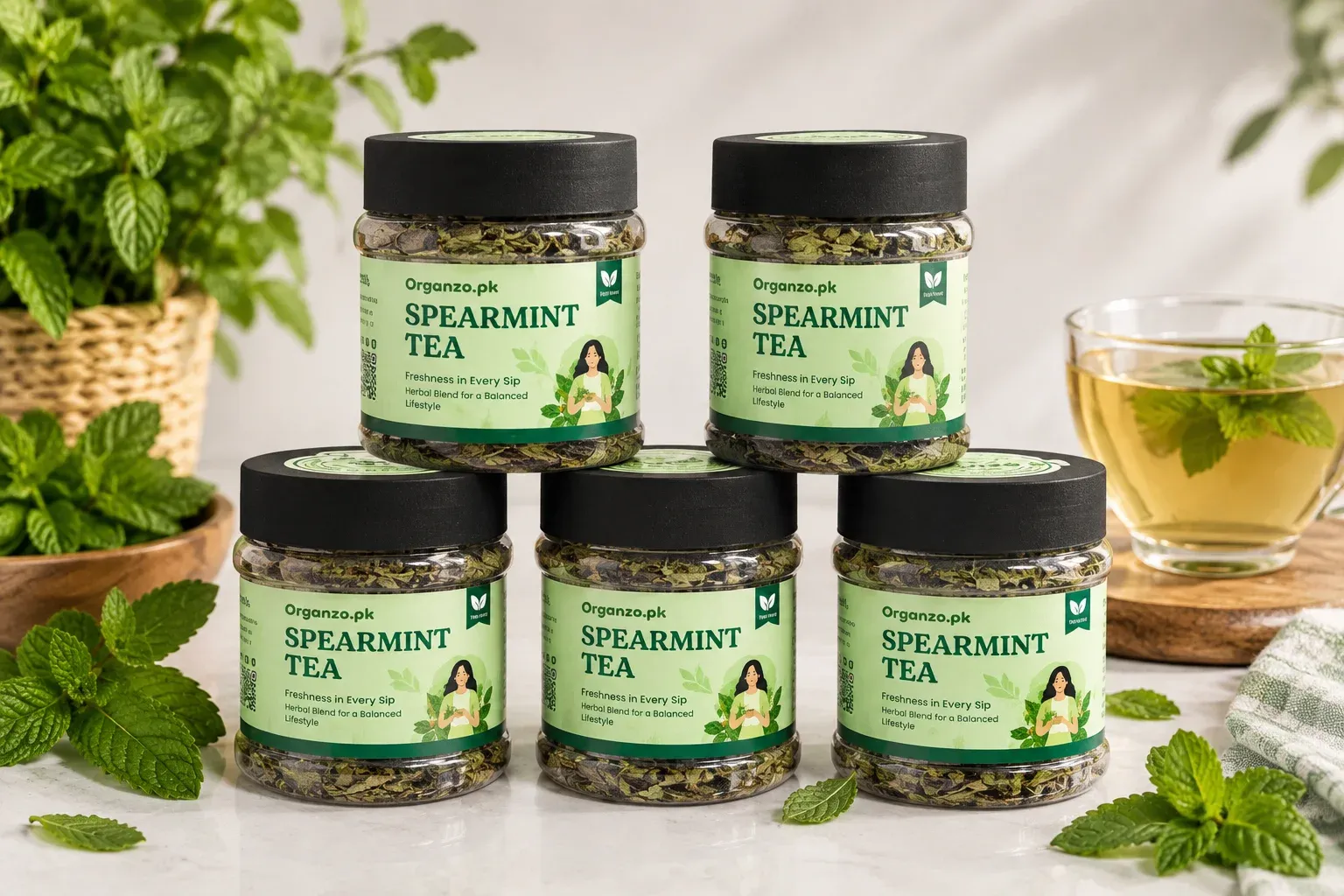
Quick answer: Two small human studies, both published in Phytotherapy Research, found that women who drank spearmint tea twice a day had lower free testosterone: a 2010 randomized trial in women with PCOS (30 days, compared with chamomile tea) and a 2007 study of 21 women with hirsutism (5 days). Neither shows that spearmint tea treats PCOS: both were small and short, and in the 2010 trial the clinician-rated hair growth did not change significantly.
Almost every “spearmint tea for PCOS” claim you will read traces back to these two papers. Because so much is built on them, they deserve a careful look, including the parts that rarely get quoted.
The two studies side by side
| 2010 trial (Grant) | 2007 study (Akdoğan et al.) | |
|---|---|---|
| Journal | Phytotherapy Research | Phytotherapy Research |
| Who took part | 42 women with PCOS-related hirsutism | 21 women with hirsutism: 12 with PCOS, 9 with idiopathic hirsutism |
| Design | Randomized, with chamomile tea as the comparison | Women drank spearmint tea and hormone levels were checked afterwards |
| What they drank | Spearmint tea twice a day for 30 days | Spearmint tea twice a day for 5 days, during the follicular phase of the menstrual cycle |
| What changed | Free and total testosterone fell significantly; patients’ own ratings of how hirsutism affected them improved | Free testosterone fell significantly; LH, FSH and estradiol rose |
| What did not change | Clinician-rated hirsutism (Ferriman-Gallwey score) was not significantly different over the 30 days | Total testosterone and DHEA-S did not change significantly |
What these studies can tell us
That drinking spearmint tea twice a day was followed by measurably lower free testosterone in women with excess androgens, and that this was seen in two separate studies, the larger of which had a comparison group. That is a genuine finding, and it is why spearmint is one of the more discussed herbs in this area.
What they cannot tell us
Whether it helps symptoms you can see. A hormone level is a marker. In the 2010 trial, patients rated hirsutism as less bothersome, but the objective score did not change significantly in 30 days.
Anything about the longer term. The studies ran for 5 and 30 days. They cannot say what happens after months of daily use, either for benefits or for safety.
Whether it helps periods or fertility. The published summaries focus on hormone levels and hair, not on cycles or conception.
Whether it works for everyone with PCOS. Both studies were small, and PCOS varies a great deal between women.
Anything about a specific brand. Neither study tested Organzo's Spearmint Tea or any other commercial product by name.
How this compares with what you will read online
Many sellers describe spearmint tea as a PCOS remedy or promise results within weeks. The studies support something narrower: a plausible effect on androgen levels in small, short trials. They do not support treatment claims, timelines for visible results, or the idea that tea can replace medical care. That is the line we hold on our own products, and the reason we describe our Spearmint Tea as an everyday caffeine-free herbal tea rather than a PCOS treatment.
If you drink it anyway
Spearmint tea is a pleasant, caffeine-free drink with a long history of everyday use, and there is no reason you cannot enjoy it. A few practical points:
The studies used spearmint, not peppermint. They are different plants; see spearmint vs peppermint tea.
Both studies used two cups a day. That describes what was studied, not a recommended dose.
Tell your doctor if you drink it regularly, especially if you take medicines that act on hormones or are pregnant or breastfeeding.
Keep PCOS care with your doctor: start with What Is PCOS? and Can PCOS Be Cured?
Frequently Asked Questions
No. Two small studies found lower testosterone levels in women who drank it. That is not proof that it treats PCOS or its symptoms.
Two cups a day: for 30 days in the 2010 trial and 5 days in the 2007 study. That is what was studied, not a dosage recommendation.
The studies lasted only 5 and 30 days, so they cannot answer that. Spearmint tea is a traditional everyday drink, but if you plan to drink it daily over a long period, especially with PCOS, hormone treatment, pregnancy or breastfeeding, ask your doctor.
The studies used spearmint, and we have not found equivalent PCOS studies of peppermint tea. They are different plants with different flavour compounds.
Sources
Study details were taken from the papers’ published summaries and from reviews that cite them. More on how we choose and describe sources is on our Editorial Standards page, and our Ingredient Research and Sources page summarizes the herb studies. This article is general information, not medical advice.
Written by
I focus on organic living, digital strategy, and health education. Through my articles on Organzo, I share practical insights on herbal teas, PCOS wellness, and natural remedies to make healthy living simple for everyone.
Keep reading

PCOS Glow Tea Ingredients Explained: Cinnamon, Shatavari, Fenugreek and Ashwagandha
What is actually in PCOS Glow Tea: what each of the four herbs is, how it is traditionally used, what research exists, and what we do not claim.
Spearmint vs Peppermint Tea: Taste, Chemistry and Which Was Studied for PCOS
Spearmint and peppermint are different plants with different flavour compounds. Here is how they differ, and why the PCOS studies used spearmint, not peppermint.

Shatavari: Traditional Uses, What Studies Exist and Safety Notes
Shatavari is a traditional Ayurvedic herb for women’s health. Here is what human trials actually exist, what they studied, and why none that we found were in PCOS.