Spearmint vs Peppermint Tea: Taste, Chemistry and Which Was Studied for PCOS

By Khawaja Saad Aslam · · 3 min read
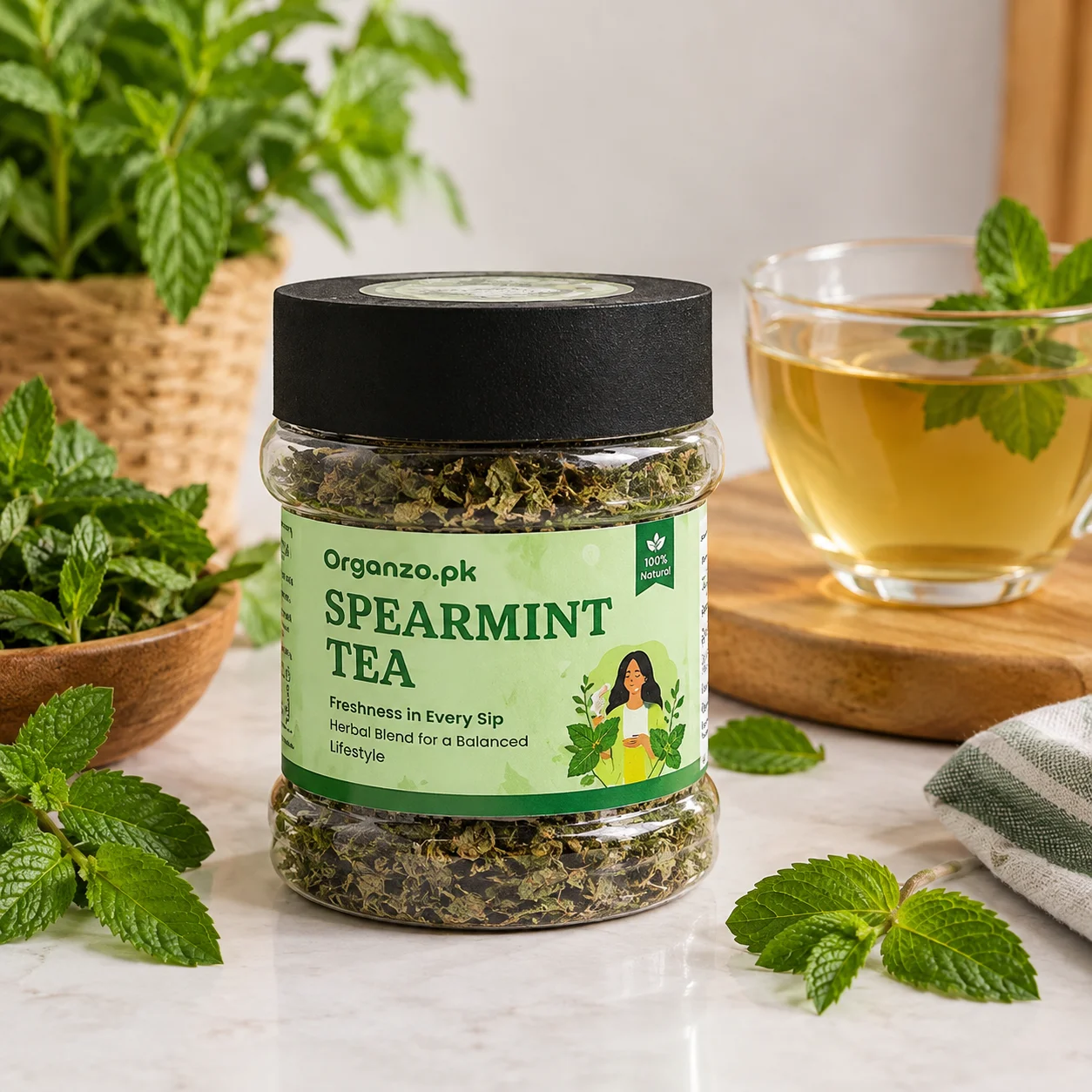
Quick answer: Spearmint (Mentha spicata) and peppermint (Mentha × piperita) are different plants. Spearmint’s aroma comes mainly from carvone, which tastes sweeter and softer; peppermint’s comes from menthol, which tastes cooler and sharper. Both make caffeine-free herbal teas. The human studies on PCOS used spearmint, so the results should not be assumed to apply to peppermint.
Walk into any Pakistani grocery and “pudina” can mean several different mints. For flavour that is a small matter; if you are choosing a tea because of research, it is a bigger one.
Two plants, two flavour profiles
Peppermint is a hybrid, a cross between spearmint and watermint. It did not inherit spearmint’s ability to make carvone; instead it produces menthol. A chemical analysis of the mints found carvone to be the predominant compound in spearmint, at about 35–45% of its oil, while peppermint’s oil was dominated by menthofuran (about 25%) and menthol (about 20%) in the plants analysed.
| Spearmint | Peppermint | |
|---|---|---|
| Botanical name | Mentha spicata | Mentha × piperita (a hybrid of spearmint and watermint) |
| Main aroma compound | Carvone | Menthol (with menthofuran) |
| Taste | Sweeter, softer and more rounded | Cooler, sharper and more intense |
| Caffeine | None | None |
| Studied for PCOS in humans | Yes: two small studies used spearmint tea | We did not find equivalent PCOS studies of peppermint tea |
Why the difference matters if you are drinking it for PCOS
The two small human studies of mint tea in women with excess androgens used spearmint, not peppermint. They are different plants with different chemistry, so a result in one is not automatic evidence for the other. Neither study shows that spearmint treats PCOS either: see spearmint tea and PCOS: what the two studies found for what they found.
How to choose
Pick by taste. If you like a gentle, slightly sweet mint, spearmint is the one; if you like a cooling, sharp finish, peppermint.
Read the label for the species. “Mint tea” or “pudina” can be spearmint, peppermint or a mix. Look for Mentha spicata if you want spearmint.
Check the ingredient list. A pure spearmint tea should list one ingredient: spearmint leaves. Our Spearmint Tea is 100% spearmint leaves with nothing added.
Do not mix up research and flavour. A tea that tastes minty is not necessarily spearmint.
Frequently Asked Questions
Peppermint tastes cooler and more intense because of its menthol. Strength in the cup also depends on how much you use and how long you steep.
We did not find PCOS studies of peppermint tea. The human studies on PCOS used spearmint, and neither shows that spearmint treats PCOS either.
Pudina is the Urdu word for mint and is used for more than one species. Check the label or ask the seller which species is in the product.
No. Spearmint and peppermint teas are herbal infusions made from mint leaves and are naturally caffeine-free.
Sources
More on how we choose and describe sources is on our Editorial Standards page, and our Ingredient Research and Sources page summarizes the herb studies. This article is general information, not medical advice.
Written by
I focus on organic living, digital strategy, and health education. Through my articles on Organzo, I share practical insights on herbal teas, PCOS wellness, and natural remedies to make healthy living simple for everyone.
Keep reading

PCOS Glow Tea Ingredients Explained: Cinnamon, Shatavari, Fenugreek and Ashwagandha
What is actually in PCOS Glow Tea: what each of the four herbs is, how it is traditionally used, what research exists, and what we do not claim.

Shatavari: Traditional Uses, What Studies Exist and Safety Notes
Shatavari is a traditional Ayurvedic herb for women’s health. Here is what human trials actually exist, what they studied, and why none that we found were in PCOS.
Ashwagandha (Asgandh) for Women: What Studies Show, Safety and Who Should Avoid It
What the US NIH says about ashwagandha: where there is some evidence, where there is not enough, and who should avoid it, including pregnancy, thyroid conditions and certain medicines.