PCOS and Facial Hair: What Helps and What Studies Say

By Khawaja Saad Aslam · · 4 min read
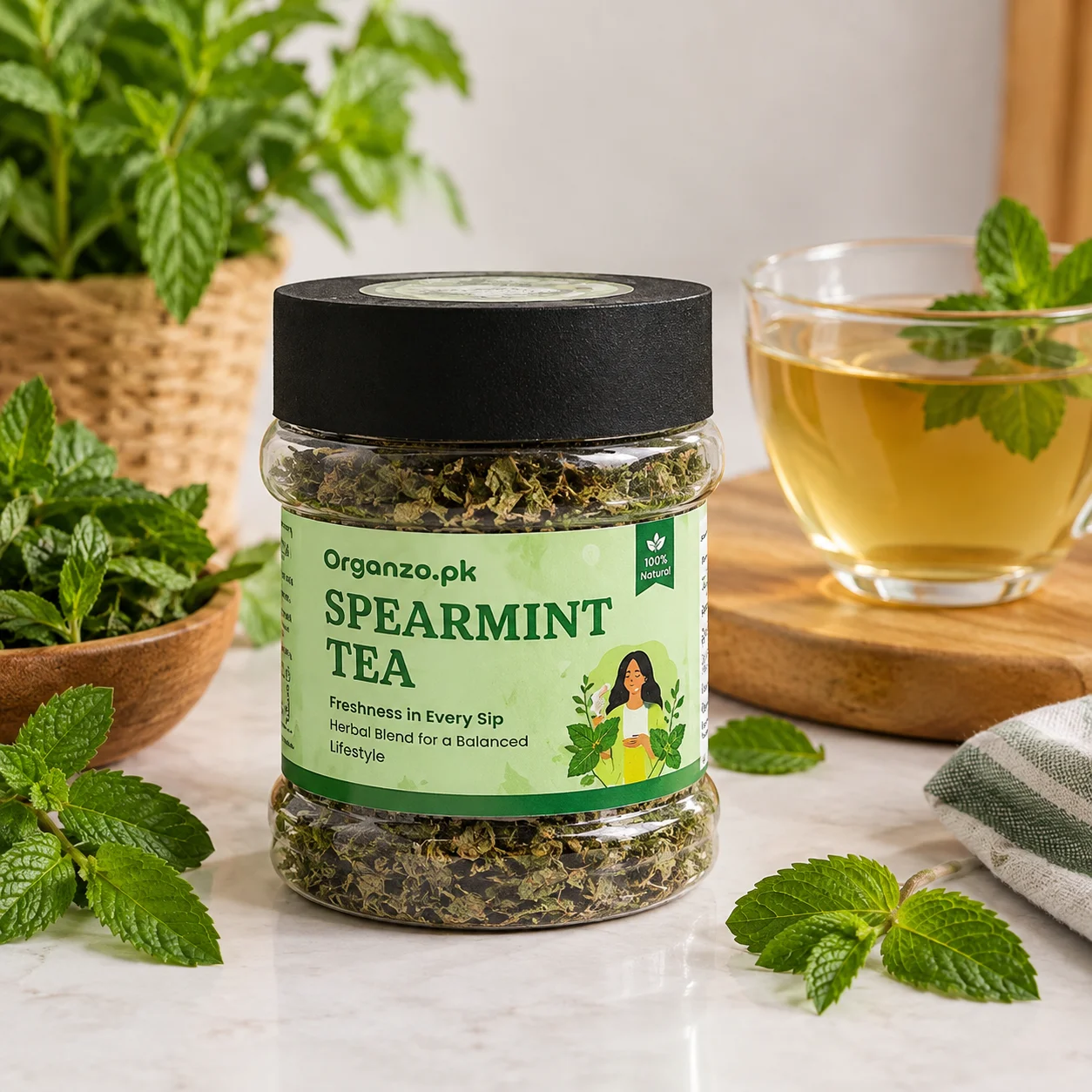
Quick answer: PCOS can cause extra hair on the face and body (hirsutism) because it involves raised androgens, the male-type hormones. The NHS lists anti-androgen medicines among the treatments, and cosmetic hair removal is another option. In a 2010 randomized trial, women with PCOS who drank spearmint tea twice a day for 30 days had significantly lower free and total testosterone than a comparison group, and rated hirsutism as less bothersome, but clinician-rated hair growth did not change significantly in that time. Spearmint tea is therefore not an established treatment for facial hair.
Unwanted facial hair is among the most distressing PCOS symptoms, and it is also where overpromising is most common. This guide explains why it happens, what usually helps, and what the spearmint research really shows, because “spearmint tea removes facial hair” is a claim you will meet constantly.
Why PCOS can cause extra hair
NICHD lists increased facial and body hair among PCOS symptoms and identifies high androgen levels as one of the features doctors look for. Androgens are hormones every woman produces in small amounts; higher levels can stimulate hair growth in areas such as the face, chest and abdomen. Hair that is thicker and darker than before is a reason to speak to a doctor, since other conditions can raise androgens too.
What usually helps
| Approach | What it does | Notes |
|---|---|---|
| Anti-androgen medicines (prescribed) | Act on the hormone effects that drive hair growth | Listed by the NHS among PCOS treatments; needs a doctor, and is not suitable for everyone |
| Cosmetic hair removal | Removes or reduces visible hair (shaving, waxing, threading, laser and similar) | NICHD notes there are ways to remove or otherwise address hair growth; it manages the hair, not the cause |
| Weight management, if overweight | Can improve PCOS symptoms overall | The NHS says losing about 5% of body weight can significantly improve symptoms |
| Spearmint tea | Lowered testosterone in two small studies | Visible hair did not change significantly in the 30-day trial; see below |
What the spearmint tea studies found
Two small human studies are the basis for the spearmint claims:
2010 randomized trial (Grant, Phytotherapy Research): women with PCOS drank spearmint tea twice a day for 30 days, compared with chamomile tea. Free and total testosterone fell significantly in the spearmint group. Patients’ own ratings of how hirsutism affected them improved, but the objective hair-growth scoring (Ferriman-Gallwey) did not change significantly over the 30 days.
2007 study (Akdoğan et al., Phytotherapy Research): 21 women with hirsutism, 12 of whom had PCOS, drank spearmint tea twice a day for 5 days. Free testosterone fell; total testosterone and DHEA-S did not change significantly.
How to read that honestly
The hormone measurements moved. That is real and interesting. But the point of treating hirsutism is less visible hair, and the one study that measured it objectively did not find a significant change within a month. Hair grows slowly, so 30 days is simply too short to say what would happen over many months, and we have not found a longer trial. Both studies were small, neither tested a long period of use, and neither tested Organzo's tea.
So the fair summary is: spearmint tea has a plausible, studied effect on androgen levels, and no one has yet shown that it visibly reduces facial hair. If a seller promises you a hair-reduction timeline, they are going beyond the evidence. You can read both studies in more detail in our write-up of spearmint tea and PCOS: what the two studies found.
A sensible way to approach it
See a doctor first, especially if the hair growth is new or rapid, to find out what is behind it.
Ask whether a prescribed treatment makes sense for you.
Use cosmetic methods for the hair you have now; they work immediately.
If you enjoy spearmint tea, treat it as a pleasant, caffeine-free habit alongside that, not a replacement. The studies used two cups a day for 5 to 30 days; that describes what was studied, not a recommendation.
Tell your doctor if you drink it regularly, particularly if you take medicines that act on hormones.
Frequently Asked Questions
There is no evidence that it removes hair. In the 30-day randomized trial, testosterone levels fell and patients rated hirsutism as less bothersome, but clinician-rated hair growth did not change significantly.
No study has shown a timeline for visible hair change. The longest trial was 30 days, which was not long enough to show a significant change in measured hair growth.
Both studies used two cups a day, for 30 days in the larger trial and 5 days in the smaller one. That is what was studied, not a dosage recommendation.
Ask your doctor or pharmacist. Spearmint tea has been shown to change hormone levels in small studies, so it is worth checking that it is sensible alongside anything you take that acts on hormones.
Sources
More on how we choose and describe sources is on our Editorial Standards page, and our Ingredient Research and Sources page summarizes the herb studies. This article is general information, not medical advice.
Written by
I focus on organic living, digital strategy, and health education. Through my articles on Organzo, I share practical insights on herbal teas, PCOS wellness, and natural remedies to make healthy living simple for everyone.
Keep reading

Can PCOS Be Cured? What Treatment Actually Looks Like
PCOS cannot be cured, but its symptoms can be treated. Here is what treatment usually involves, where herbal products fit, and the questions worth asking your doctor.

PCOS Diet in Pakistan: A Practical Guide to Desi Meals
There is no single best PCOS diet, but there are sensible ways to build desi meals around daal, whole-wheat roti, sabzi and protein. Here is what the evidence supports.

What Is PCOS? Symptoms, Diagnosis and When to See a Doctor
What PCOS is, the symptoms to know, how doctors diagnose it, and when to see a doctor — a plain-language guide for women in Pakistan, sourced from WHO and the US NIH.