Herbal Tea When Pregnant or Trying to Conceive: What to Check First

By Khawaja Saad Aslam · · 4 min read

Quick answer: The NHS advises pregnant women not to drink more than 4 cups of herbal tea a day, to avoid teas containing liquorice root, and notes that there is little research on herbal teas in pregnancy. Caffeine should stay under 200 mg a day. “Natural” and “caffeine-free” do not mean pregnancy-safe: the NIH says ashwagandha should be avoided in pregnancy and fenugreek is not safe in pregnancy above food amounts, so we do not recommend our PCOS Glow Tea during pregnancy or breastfeeding.
Note on ingredients: this guide covers the four named herbs: cinnamon, shatavari, fenugreek and ashwagandha. The product page also lists “special herbal ingredients” without naming them. If you are pregnant, breastfeeding, allergic or taking medicine, ask us for the full ingredient list before you drink it.
Many women with PCOS are trying to conceive, and many switch to herbal tea in the hope it is a gentler choice. It is a sensible instinct, but it needs one important correction: herbal does not automatically mean safe in pregnancy. This guide sets out what the NHS and the US NIH say and how we apply it to our own teas.
What the NHS says about herbal tea and caffeine
The NHS pregnancy guidance says there is not much research on the effects of drinking herbal teas in pregnancy, so it is safest to limit how much you drink. Its specific advice:
| Topic | NHS advice |
|---|---|
| Herbal tea | Do not drink more than 4 cups a day |
| Liquorice root | Avoid teas containing liquorice root; it may be harmful to your baby’s development |
| Caffeine | No more than 200 mg a day in total; a cup of tea has about 75 mg and a cup of instant coffee about 100 mg |
| Why the limits | There is limited research on herbal teas in pregnancy, so limiting intake is a precaution |
What the sources say about the herbs in PCOS Glow Tea
Our PCOS Glow Tea contains four herbs. Here is what authoritative sources say about each in pregnancy, and what we advise.
| Herb | What authoritative sources say | What we advise |
|---|---|---|
| Ashwagandha | NCCIH: should be avoided during pregnancy and not used while breastfeeding | Do not drink PCOS Glow Tea while pregnant or breastfeeding |
| Fenugreek | NCCIH: not safe in pregnancy in amounts greater than those in food; linked to birth defects in animals and people | Do not drink PCOS Glow Tea while pregnant or breastfeeding |
| Cinnamon | We found no specific pregnancy guidance in the sources we reviewed; the German BfR cautions about high regular intakes of cassia cinnamon | Ask your doctor |
| Shatavari | We did not find an authoritative safety summary | Ask your doctor |
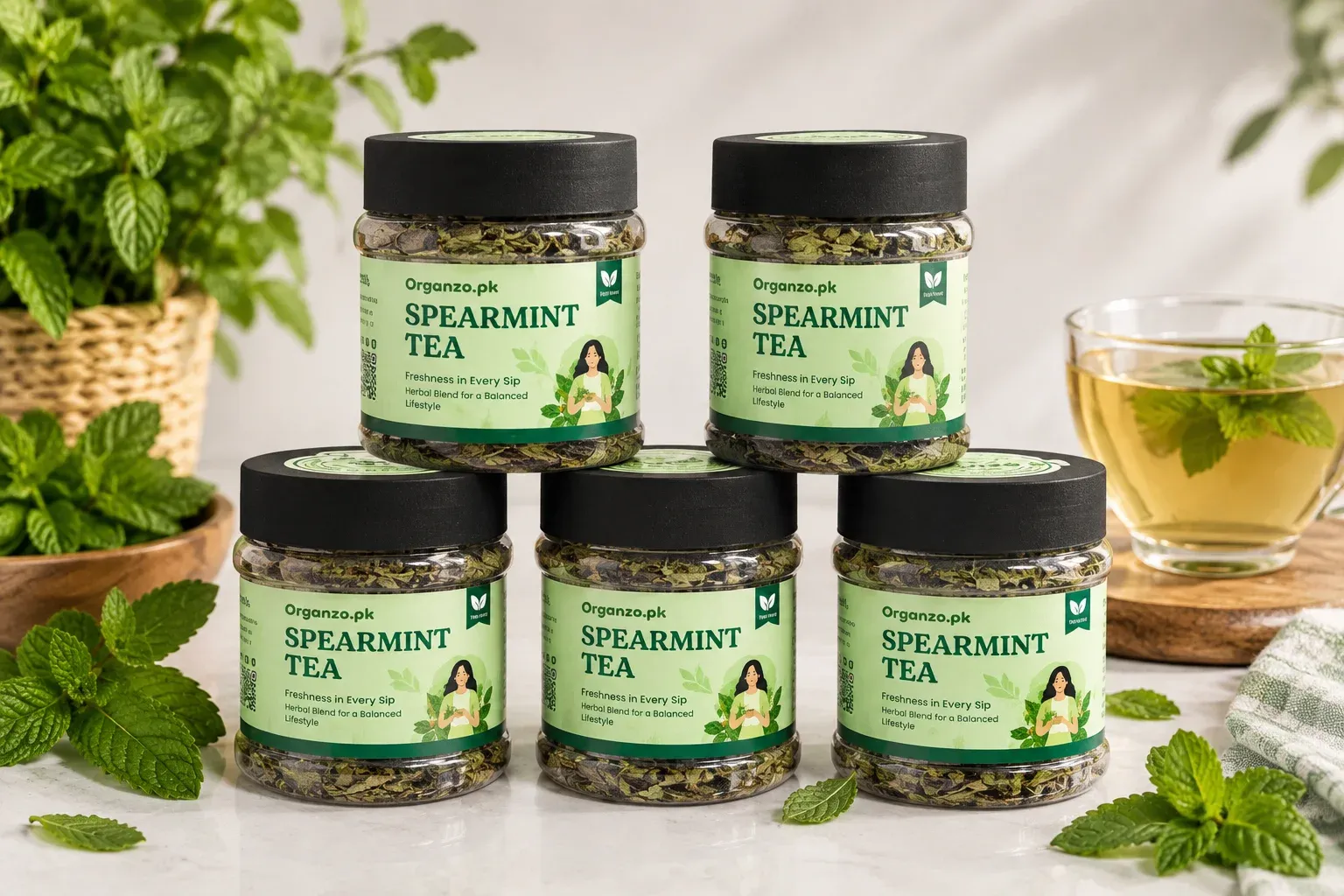
| Spearmint (in our Spearmint Tea) | Few formal safety studies; the NHS notes limited research on herbal teas generally | Ask your doctor or midwife |
If you are trying to conceive
PCOS and conception are closely linked: WHO lists PCOS among the leading causes of difficulty conceiving. If you are trying to conceive, our suggestion (this is our advice, not NHS guidance) is to choose herbal products as though you might already be pregnant, and to ask your doctor before using any herb that carries a pregnancy warning. You may not know for a few weeks, and some herbs are best avoided from the start.
“Caffeine-free” is not the same as “pregnancy-safe”
Genuine herbal infusions such as spearmint, chamomile and the herbs in our blend contain no caffeine, which helps you stay under the 200 mg limit. But what is in a tea matters as much as what is not. Caffeine-free tells you nothing about whether the herbs themselves are suitable in pregnancy.
What to ask your midwife or doctor
Is there any herb on this ingredient list that I should avoid at this stage?
How many cups a day is reasonable for me?
I have PCOS and take medicine for it; does that change the answer?
If I am breastfeeding, is the answer different?
For the full checklist of who should check first before our blend, see who should avoid PCOS Glow Tea, and for the herbs one by one, ashwagandha (asgandh) and fenugreek (methi dana) and PCOS.
Frequently Asked Questions
There are few formal safety studies, and the NHS notes there is limited research on herbal teas in pregnancy. Ask your midwife or doctor before drinking it regularly.
We suggest asking your doctor first. Two of its herbs, ashwagandha and fenugreek, carry pregnancy warnings from the US NIH, so we do not recommend it once you are pregnant or breastfeeding.
The NHS advises no more than 4 cups of herbal tea a day, and avoiding teas that contain liquorice root. The type of herb matters as well as the number of cups.
The NHS says no more than 200 mg a day, and gives about 75 mg for a cup of tea and 100 mg for a cup of instant coffee.
Sources
NCCIH (US National Institutes of Health): Ashwagandha, usefulness and safety
NCCIH (US National Institutes of Health): Fenugreek, usefulness and safety
World Health Organization: Polycystic ovary syndrome fact sheet
German Federal Institute for Risk Assessment (BfR): FAQ on coumarin in cinnamon and other foods
More on how we choose and describe sources is on our Editorial Standards page, and our Ingredient Research and Sources page summarizes the herb studies. This article is general information, not medical advice.
Written by
I focus on organic living, digital strategy, and health education. Through my articles on Organzo, I share practical insights on herbal teas, PCOS wellness, and natural remedies to make healthy living simple for everyone.
Keep reading

How to Make and Drink PCOS Glow Tea: Steps, Timing and Tips
How to brew PCOS Glow Tea properly: the right water temperature and steeping time, how many cups a day, when to drink it and what to realistically expect.

Who Should Not Drink PCOS Glow Tea? A Safety Checklist
A plain checklist of who should speak to a doctor before drinking PCOS Glow Tea, with the reason and the source for each: pregnancy, thyroid, liver, diabetes medicines and more.
Can Men Drink Spearmint Tea? What We Know and Don’t
Studies of spearmint tea enrolled women and found lower testosterone. Here is what that does and does not tell us about men, and when to check with a doctor.